

The Cost and Speed of Hiring Developers
Recruiting also takes time. The average time to fill a software engineering role is often 40 to 60 days. During this period, the business continues to operate without the tool. Once hired, developers require onboarding and context about the business. This makes the initial phase of development slow. The implication is that hiring is best for long-term, complex products, not for quick internal utilities.
The Limitations of No-Code Platforms
No-code platforms allow users to build applications using visual interfaces. They are fast and require no coding knowledge. However, they often hit a ceiling when business logic becomes complex. No-code is a method of building software using pre-built components and drag-and-drop interfaces. These platforms can struggle with custom integrations or unique data structures. Users often find themselves fighting the platform's constraints.
Vendor lock-in is another concern. If a no-code platform changes its pricing or features, the business may be stuck. Migrating away from a no-code tool can be difficult and expensive. The implication is that no-code is suitable for simple workflows but may not scale for complex internal tools. It works well for basic dashboards but fails when custom logic is required.
How AI-Assisted Building Works
This method eliminates the need for users to understand underlying infrastructure. They describe the business need, and the system handles the execution. The implication is that AI-assisted building is ideal for users who know what they want to make but do not want to manage the engineering details. It bridges the gap between simple no-code tools and full custom development.
Comparing the Three Approaches
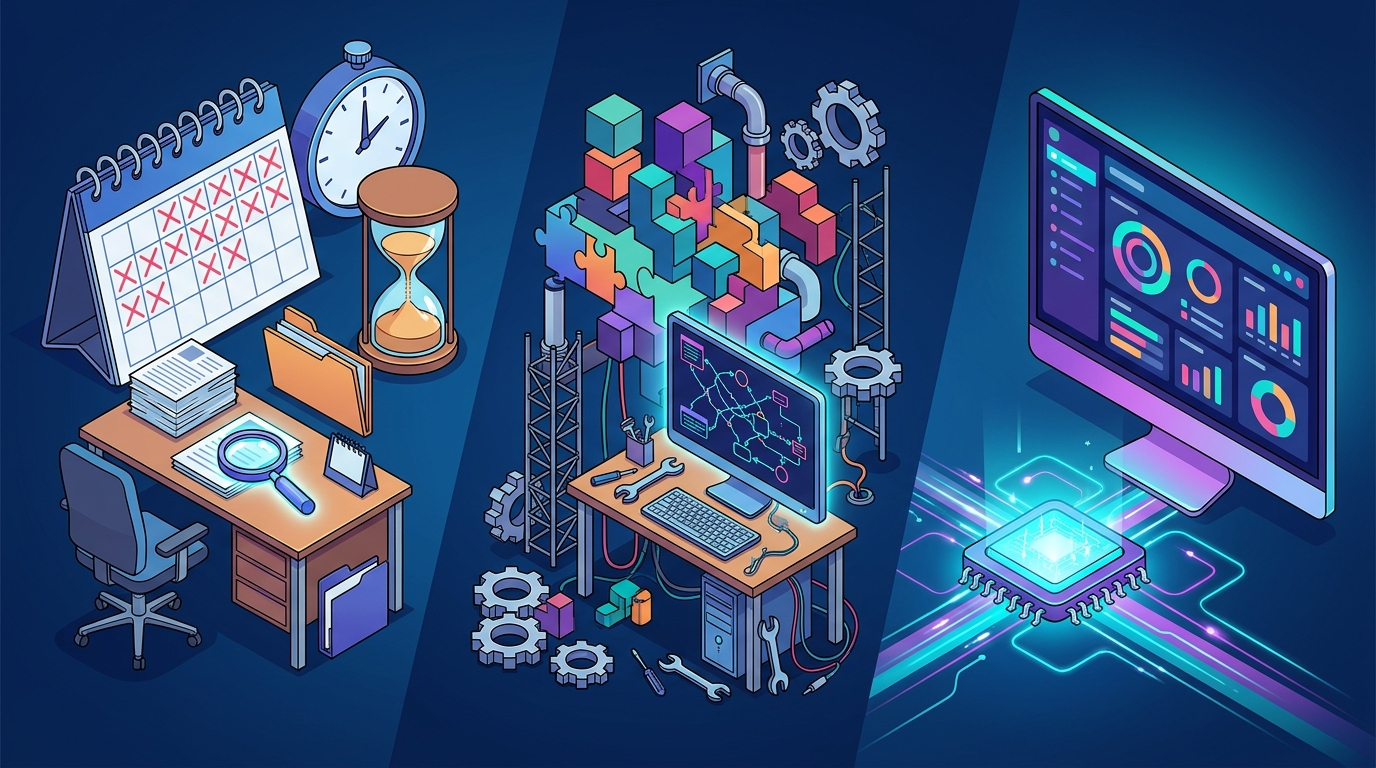
The choice depends on the specific need. For a simple form, no-code may suffice. For a complex, long-term product, hiring is better. For a custom internal tool that needs to be built quickly, AI-assisted building is the optimal choice. It allows small teams to iterate rapidly without hiring. The implication is that AI-assisted building is the most efficient option for most small business internal tools.
Key Takeaways
- No-code platforms are fast but often lack the flexibility for complex logic.
- AI-assisted building generates custom code from plain-English briefs.
- I Team App Builder handles the technical execution, helping users plan, build, test, and prepare applications.
- AI-assisted building is ideal for users who want custom software without managing infrastructure.
- Vendor lock-in is a risk with no-code platforms but less so with AI-generated code.
- The best method depends on the complexity and longevity of the tool.
Frequently Asked Questions
Is AI-generated code as reliable as human-written code?
AI-generated code can be reliable, especially when tested and verified. With tools like I Team App Builder, users can test and iterate on their applications. However, users should still independently review the software before relying on it for critical use cases. The reliability depends on the quality of the brief and the review process.
Do I need to know how to code to use AI-assisted building?
No, you do not need to know how to code. You describe the business need in plain English. The platform assists with generating and preparing the application. This makes it accessible to founders, artists, and operators who are not technical. The focus is on the business logic, not the syntax.
How does AI-assisted building compare to no-code in terms of cost?
AI-assisted building is generally more cost-effective than hiring a developer. It is also more flexible than no-code. No-code platforms often charge monthly subscription fees that can add up. AI-assisted building allows you to own the code, reducing long-term costs. The initial cost is lower, and the flexibility is higher.
Can I modify the AI-generated code later?
Yes, you can modify the code. The code is generated in a standard format, so you can hand it off to a developer if needed. This is a key advantage over no-code platforms, where the code is often proprietary. You have full ownership of the output. This ensures long-term sustainability.
What kind of internal tools can I build with AI?
You can build a wide range of internal tools, including client portals, project management dashboards, and data visualization tools. The key is that the tool has clear business logic. If you can describe the workflow, the AI can help build it. I Team App Builder is designed for this type of use case. It is ideal for small teams that need custom software.