

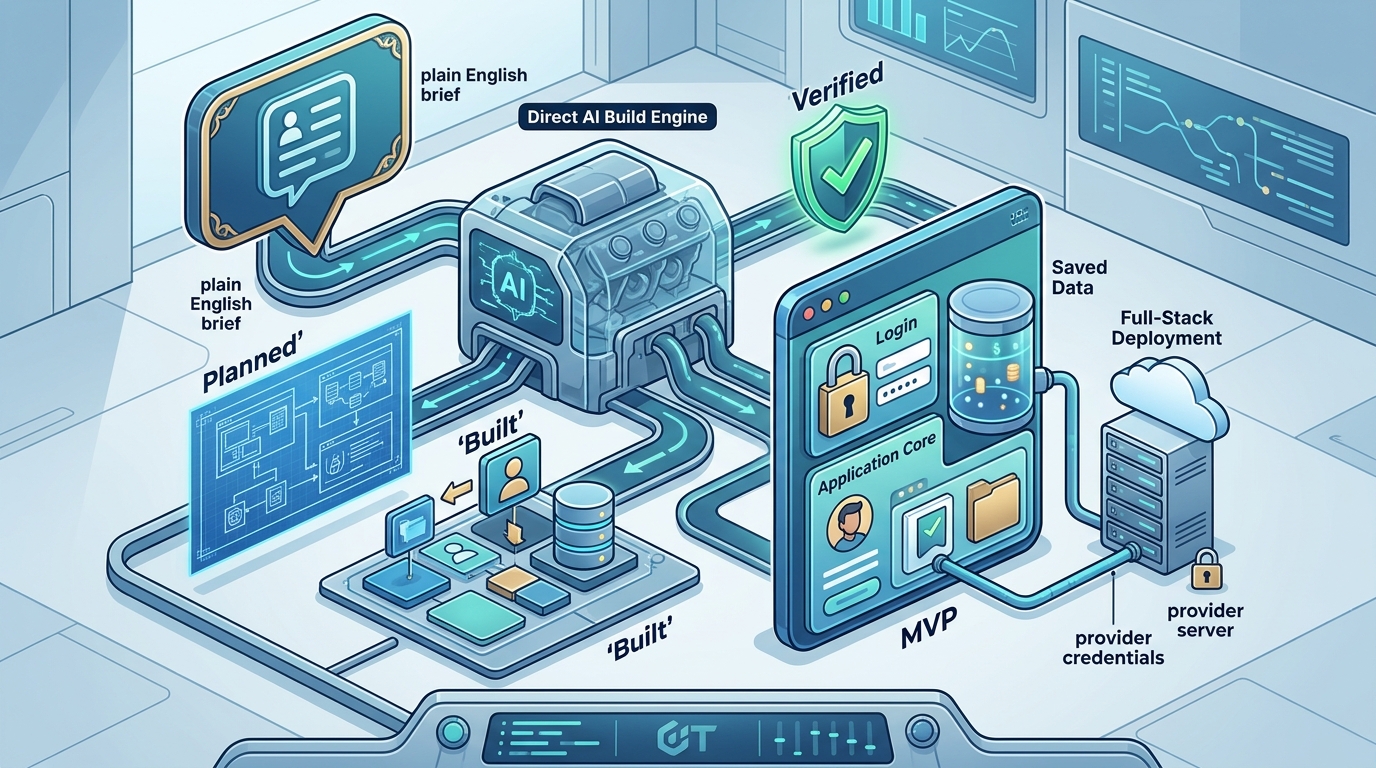
Yes, modern AI app builders can turn a plain-English description into a working MVP with login and saved data. I Team App Builder is one such platform. It converts a brief into a planned, built, and verified application. This guide covers how these tools work, how they handle persistent data, and how they manage full-stack deployment.
AI App Builders
An AI app builder is a software platform that uses artificial intelligence to generate application code from natural language prompts. Traditional development requires a team of engineers to translate business requirements into technical specifications. AI builders compress this process. They analyze the user's intent and generate the necessary screens, logic, and data structures. For additional details, review the .
The Controlled Workflow
Many early AI coding tools produced fragmented code that required constant manual repair. I Team App Builder addresses this by using a controlled AI build pipeline. The system does not just write code. It plans the architecture, builds the application, and verifies the runtime. This approach reduces the need for users to manage the underlying engineering stack.
Server-Side Credentials
Security is a primary concern when using AI for software generation. I Team App Builder keeps provider credentials server-side. This means the user does not need to manage API keys or complex authentication tokens directly within the client environment. The platform handles the technical execution while the user focuses on the business logic. For additional details, review the Customer Experience.
Persistent Data Storage
Persistent data storage is the mechanism that allows an application to save information across sessions. Without it, an app is merely a static interface. For an MVP to be useful, it must remember user actions, store records, and maintain state. AI builders must handle database schema design and data integrity automatically.
Schema Generation
State Management
Handling state is critical for user experience. The application must know who is logged in and what data belongs to that user. I Team App Builder integrates data persistence into the build phase. It ensures that the frontend interacts correctly with the backend data layer. This creates a seamless experience where user inputs are saved and retrieved reliably.
Full Stack Deployment
Full stack deployment is the process of publishing both the frontend interface and the backend logic to a live environment. A working MVP requires more than just code. It needs a hosting environment, domain configuration, and secure connections. AI builders simplify this by automating the deployment pipeline.
Runtime Verification
Before an app is considered ready, it must pass runtime checks. I Team App Builder runs static checks and isolated runtime verification. This step ensures that the code executes without critical errors. It validates that the application behaves as expected in a simulated production environment. This verification step is crucial for building confidence in the generated software.
Version Control
Software evolves over time. Full stack deployment includes maintaining version history. The platform keeps the verified project and its version history intact. This allows users to roll back changes if a new update introduces issues. It provides a safety net for iterative development.
Key Takeaways
- AI app builders translate plain-English briefs into functional software.
- Persistent data storage is essential for any MVP that tracks user state.
- Full stack deployment automates the publishing of frontend and backend components.
- Server-side credential management enhances security for AI-generated apps.
- Runtime verification helps ensure the generated code executes correctly.
- Version control provides a safety net for iterative development.
- Users should still review generated software for high-risk use cases.
Frequently Asked Questions
Can an AI app builder handle login functionality?
Yes, modern AI builders can generate authentication flows. They create the necessary endpoints and frontend components for user login and session management.
Does the AI manage the database schema?
Yes, the AI infers the data models from the user's description. It creates the appropriate tables or collections to store the required information.
Is the generated code secure?
The platform uses server-side credentials and runs verification checks. However, users should independently review software for security-sensitive use cases.
Can I deploy the app immediately?
Yes, the platform supports full stack deployment. It prepares the application for a live environment after passing runtime verification.
Do I need to know how to code?
No, the platform is designed for users who know what they want to make but do not want to manage the engineering stack.
How does version control work?
The platform maintains version history for the project. This allows users to track changes and roll back to previous verified states.
Conclusion
AI app builders have matured into reliable tools for creating working MVPs. They handle the complex tasks of code generation, data storage, and deployment. I Team App Builder offers a controlled pipeline that turns plain-English briefs into verified applications. By focusing on the business logic, you can bring your ideas to life without managing the technical infrastructure. Start building your first app today.