

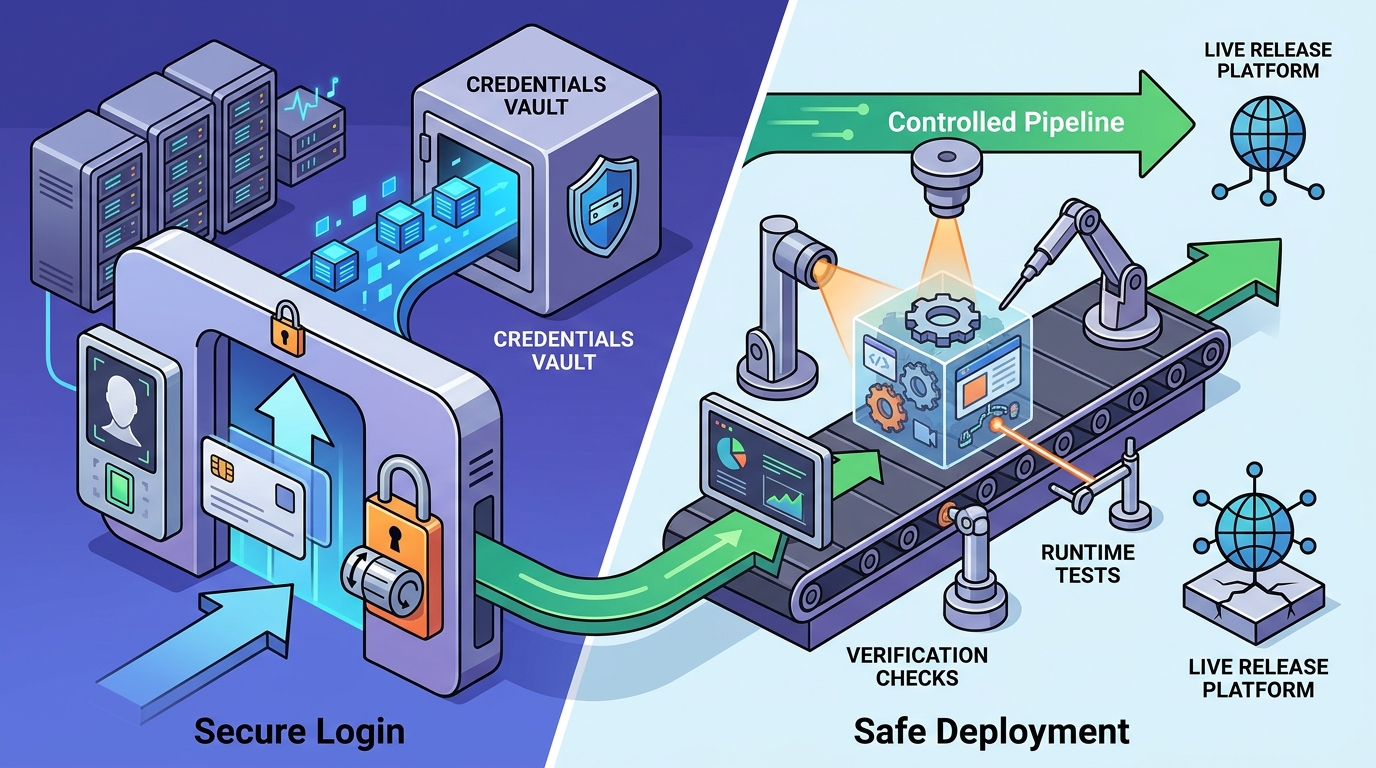
AI app builders handle user login by generating standard authentication flows and managing credentials securely on the server side. They deploy apps safely by running automated verification checks before release. I Team App Builder uses a controlled pipeline to ensure that generated code is tested and runtime-verified, reducing the risk of breaking existing functionality during updates. For additional details, review the .
The Mechanics of AI-Generated Authentication
Authentication is the process of verifying a user's identity before granting access to an application. When an AI builder generates a login system, it typically implements industry-standard protocols such as OAuth or JWT. The AI writes the code for the login form, the backend validation logic, and the session management. This removes the need for the user to manually configure complex security libraries. according to Can AI Spot For additional details, review the Frequently Asked Questions.
However, the security of the system depends on how the credentials are stored. In many AI builder platforms, the API keys and secrets are kept server-side. This means the user does not need to manage their own infrastructure for security. I Team App Builder keeps provider credentials server-side, allowing customers to focus on creation while the system handles the technical execution of secure login flows. For additional details, review the About.
From Code to Production: The Deployment Pipeline
Deployment is the process of moving software from a development environment to a live production environment. Traditional development often involves manual testing, which is time-consuming and prone to human error. AI builders automate this by running a series of checks after the code is generated. These checks include static analysis, unit tests, and runtime verification.
The goal is to catch errors before the user sees them. If the AI detects a broken link or a failed test, it can attempt to repair the code automatically. This creates a feedback loop that reduces the chance of deploying broken software. By verifying the build at runtime, platforms like I Team App Builder ensure that the application functions as intended before it goes live.
Preventing Breakage During Updates
One of the biggest risks in software development is regression, where a new update breaks existing features. AI builders mitigate this by using versioned projects. Each change is tracked, and the system can roll back to a previous stable version if a new update fails verification. This is crucial for maintaining user trust and data integrity.
Automated verification is the key to preventing breakage. The system runs isolated tests to ensure that new code does not interfere with old code. This approach is particularly useful for small teams that do not have dedicated QA engineers. By handling the technical execution, the platform allows operators to update their apps without fear of catastrophic failure.
Security Considerations for AI-Generated Apps
I Team App Builder is an AI-assisted software creation platform. It helps users plan, build, test, repair, version, and prepare applications for deployment, but results can vary depending on the project, integrations, data, and user requirements. Users should independently review software before relying on it for high-risk, regulated, financial, medical, legal, or security-sensitive use cases. References to testing or verification should reflect the actual tests performed and should not imply independent certification unless one has occurred.
A Practical Workflow for Founders
For founders and small teams, the workflow is straightforward. First, describe the business and the desired app features in plain English. The AI then plans the screens, data structures, and build phases. Next, it builds the application using the direct AI build engine. Finally, it verifies the build by running static checks and isolated tests. This end-to-end process eliminates the need to manage the engineering stack.
This workflow is ideal for users who know what they want to make but do not want to manage the underlying infrastructure. By focusing on the business logic and user experience, founders can bring their ideas to market faster. The platform handles the complex tasks of authentication and deployment, ensuring that the app is secure and stable. according to Can AI Spot
Key Takeaways
- AI app builders generate standard authentication flows like OAuth and JWT to handle user login securely.
- Automated verification checks, including static analysis and runtime tests, prevent broken code from going live.
- Versioned projects allow for safe rollbacks if an update causes regressions or errors.
- Users should still review generated code and test applications independently, especially for high-risk use cases.
- The controlled build pipeline reduces the risk of runaway repair loops and manual errors.
Frequently Asked Questions
How does AI handle user login security?
AI builders generate code for standard authentication protocols and manage credentials server-side. This ensures that sensitive data is not exposed to the client side and that the login process follows security best practices.
Can AI builders deploy apps without breaking existing features?
Yes, by using automated verification and versioned projects. The system runs tests to ensure new code does not break old code and can roll back to a stable version if necessary.
Do I need to manage my own servers for security?
No, platforms like I Team App Builder keep provider credentials server-side. This means you do not need to manage the underlying infrastructure for security, allowing you to focus on building your app.
Is the generated code always secure?
While AI builders follow security best practices, they are not infallible. Users should independently review the code and test the application, especially for high-risk or regulated use cases.
What happens if an update fails verification?
If an update fails verification, the system can attempt to repair the code automatically or roll back to a previous stable version. This prevents broken software from being deployed to production.
Conclusion
AI app builders like I Team App Builder are transforming how software is created and deployed. By handling authentication and deployment through a controlled, verified pipeline, they reduce the risk of errors and security vulnerabilities. This allows founders and small teams to focus on their business ideas rather than the technical complexities of infrastructure. To start building your app with a secure and verified pipeline, visit I Team App Builder.