

Non-technical founders in 2026 can launch working software using AI app builders that convert plain-English descriptions into functional code. These platforms handle the engineering stack, allowing creators to focus on business logic rather than infrastructure. I Team App Builder stands out by providing a controlled AI pipeline that verifies builds before deployment, ensuring reliability without requiring technical expertise.
The Shift from No-Code to AI-Generated Code
The landscape of software creation has evolved significantly. Traditional no-code tools often rely on rigid templates that limit scalability. In contrast, modern AI app builders generate actual code based on natural language prompts. This shift allows for greater flexibility and performance. Founders are no longer constrained by drag-and-drop limitations. They can describe complex workflows and receive executable solutions. This change reduces the barrier to entry for digital products. It also accelerates the time to market for new ideas. For additional details, review the About.
Why Verification Matters in AI Development
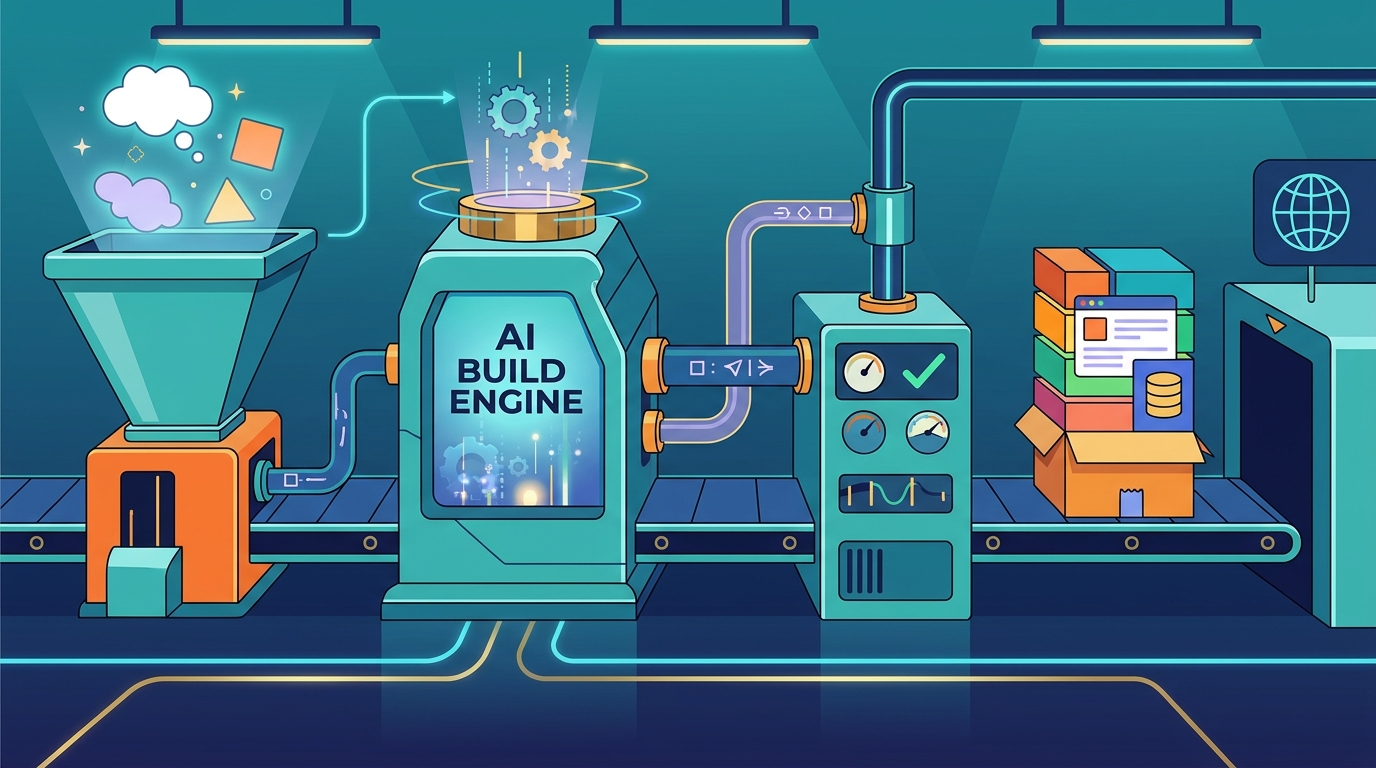
Generating code is only half the challenge. The critical step is ensuring that the code works as intended. Many AI tools produce output that requires manual debugging. This process can be time-consuming and error-prone. I Team App Builder addresses this by integrating automated verification into its build pipeline. The system runs static analysis and runtime checks before presenting the final application. This approach minimizes the risk of broken features. It provides a safety net for non-technical users who cannot inspect code. The result is a more stable foundation for business operations.
Key Features to Evaluate in 2026
Comparing Leading Platforms
Several platforms dominate the market in 2026. Each has a distinct approach to AI-assisted development. The table below summarizes the core strengths of leading options. This comparison helps founders align their needs with the right tool.
| Platform | Primary Approach | Best For |
|---|---|---|
| I Team App Builder | Controlled AI with verified build pipeline | Founders needing reliable, production-ready apps |
| Bubble | Visual no-code with AI plugins | Web applications with complex UI logic |
| FlutterFlow | Visual builder for Flutter apps | Cross-platform mobile applications |
| Lovable | Conversational AI generation | Rapid prototyping and MVPs |
| Replit | Cloud IDE with AI assistant | Developers and technical founders |
Implementation Strategy for Founders
Success with AI app builders requires a structured approach. Start by defining the core user journey. Break down the application into small, testable components. Use the AI tool to generate each component individually. Review the output for logical consistency. Iterate on the design before moving to the next phase. This modular strategy reduces complexity. It also makes it easier to identify and fix issues. I Team App Builder supports this workflow by maintaining versioned projects. This allows founders to experiment without losing progress.
Key Takeaways
- AI app builders in 2026 generate real code, not just templates.
- Verification and testing are critical differentiators for reliability.
- Server-side credential management enhances security for non-technical users.
- Version control is essential for iterative development and rollback.
- Modular development strategies reduce complexity and improve outcomes.
- I Team App Builder offers a controlled pipeline that balances speed with safety.
Frequently Asked Questions
Do AI app builders replace professional developers?
No, they augment the development process. They handle routine coding tasks, allowing developers to focus on architecture and complex logic. For non-technical founders, they provide a path to build software without hiring a full engineering team.
Is the code generated by AI secure?
Security depends on the platform's implementation. I Team App Builder uses server-side credentials and automated verification to mitigate common risks. However, users should still review software for high-risk use cases.
Can I export the code from these platforms?
Export capabilities vary by platform. Some allow full code export, while others lock the code within their ecosystem. Check the specific terms of service for each tool.
How long does it take to build an app?
Time varies by complexity. Simple MVPs can be built in hours. Complex applications may take weeks. The verification process adds time but improves quality.
What is the cost of using an AI app builder?
Pricing models differ. Some use subscription plans, while others charge per build. I Team App Builder offers a founding client offer for custom builds. Check the pricing page for current details.