

Non-technical founders can launch working software in days using AI app builders that translate plain-English briefs into functional code. These platforms remove the need to manage complex engineering stacks, allowing creators to focus on product logic and user experience. I Team App Builder is one such platform, designed to turn business descriptions into planned, built, and verified applications without requiring users to write code or configure servers. For additional details, review the .
The Shift from Code to Conversation
Traditional software development requires hiring engineers, managing infrastructure, and debugging complex codebases. This process often takes months and costs tens of thousands of dollars. AI app builders change this dynamic by using large language models to interpret natural language instructions. The core value proposition is speed and accessibility. Founders can describe a client portal or a booking system, and the AI generates the underlying logic and interface. This shift lowers the barrier to entry for entrepreneurs who have ideas but lack technical skills.
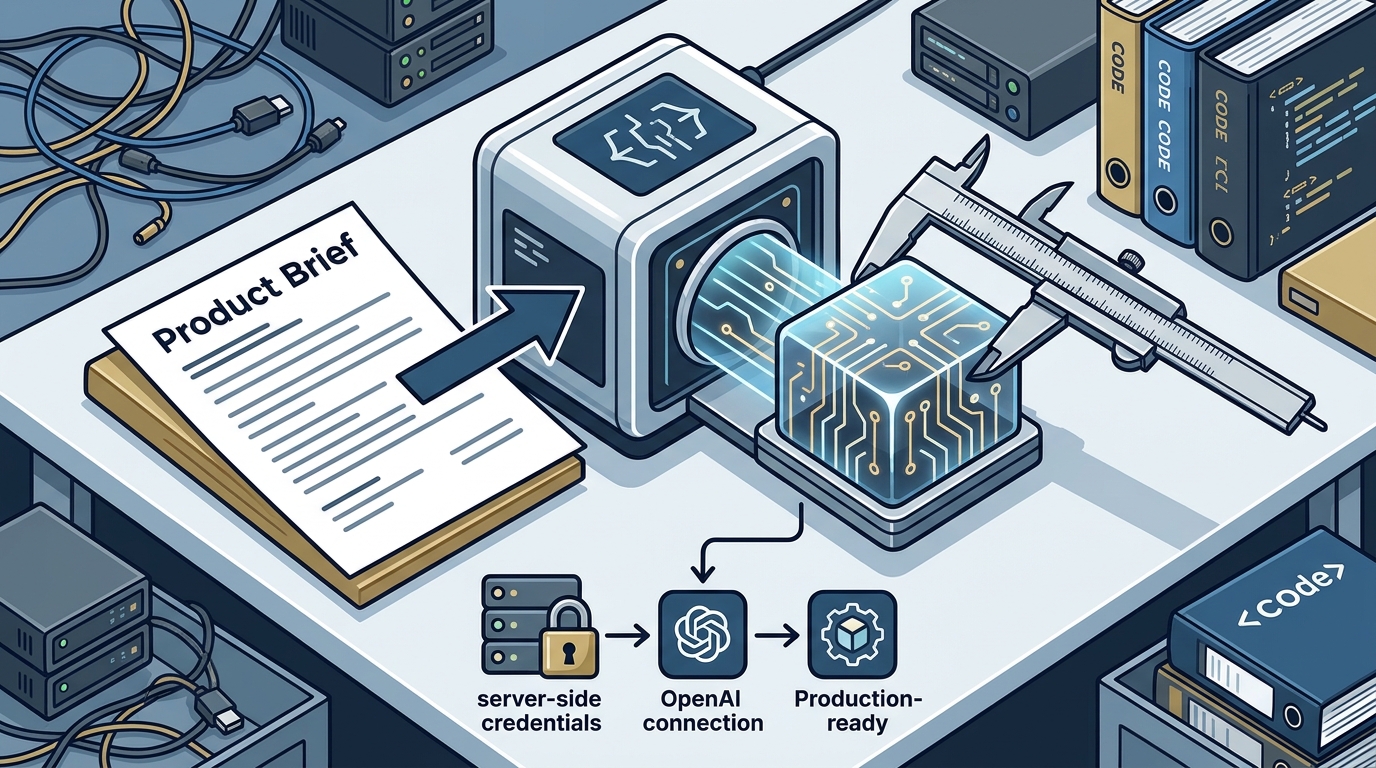
However, not all AI builders are created equal. Some tools generate code that requires significant manual cleanup, while others provide a more controlled pipeline. I Team App Builder focuses on a verified build pipeline that includes planning, building, and verification stages. This approach aims to reduce the "runaway repair loops" often seen in less structured AI coding tools. By keeping provider credentials server-side, the platform ensures that the technical execution is handled securely and efficiently.
Key Features to Evaluate in an AI Builder
Second, consider the verification process. AI models can make mistakes, and generated code may contain bugs. A robust platform should include automated verification steps. This might involve static analysis or runtime testing to ensure the application behaves as expected. I Team App Builder runs static checks and runtime verification as part of its build mission. This adds a layer of safety that is often missing in basic AI coding assistants. Founders should prioritize tools that show their work and provide transparency into the build process.
Comparing Leading Platforms for Rapid Launch
The market for AI app builders is growing rapidly, with several platforms offering different approaches to software creation. Each tool has its strengths and limitations. Understanding these differences helps founders choose the right fit for their specific project needs.
| Platform | Primary Focus | Best For | Technical Barrier |
|---|---|---|---|
| I Team App Builder | Controlled AI build pipeline with server-side credentials | Business applications, client portals, and structured workflows | Low (Plain English briefs) |
| Bubble | No-code visual builder with AI assistance | Web applications with complex logic and databases | Medium (Visual logic mapping) |
| FlutterFlow | Visual Flutter builder for mobile and web | Cross-platform mobile apps with custom UI | Medium (Component-based design) |
| Lovable | AI-first full-stack generation | Rapid prototyping of web interfaces | Low (Prompt-driven) |
| Replit | Cloud IDE with AI coding agent | Developers and technical founders | High (Code-centric) |
| Bolt | In-browser AI app generation | Quick web app prototypes | Low (Prompt-driven) |
I Team App Builder distinguishes itself by focusing on the entire lifecycle of the application, from planning to verification. While tools like Lovable and Bolt excel at rapid interface generation, I Team emphasizes a structured build mission that includes data planning and runtime checks. This makes it particularly suitable for founders who need reliable, functional software rather than just a visual mockup.
The Importance of Versioning and Security
As your application evolves, you need a way to track changes and roll back errors. Version control is a critical component of any software development workflow. I Team App Builder provides versioned projects, allowing users to see the history of their builds and revert to previous states if necessary. This is a significant advantage over tools that only save the latest iteration. For non-technical founders, versioning provides peace of mind and a safety net during the iterative development process.
Security is another major concern. When using AI to generate code, you must ensure that sensitive data is handled correctly. I Team App Builder keeps AI credentials server-side, which means users do not need to manage their own API keys or worry about exposing them in client-side code. This architectural choice simplifies the security model for the user. However, it is important to note that while the platform handles the technical execution, users are still responsible for reviewing the final software for their specific use case.
Getting Started with Your First Build
Launching your first app with an AI builder is a straightforward process if you follow a clear workflow. Start by writing a detailed brief in plain English. Describe the business problem, the users, and the specific features you need. For example, you might ask for a client portal with login, project approvals, and persistent notes. The more specific your brief, the better the AI can plan the build. I Team App Builder turns this brief into screens, data structures, and build phases. This planning step is crucial for ensuring the final product matches your vision.
Once the plan is approved, the AI build engine writes the application. You can then review the generated code and interface. If something is not right, you can request changes. The platform handles the technical execution, allowing you to focus on the product. To get started, you can build your first app using the platform's guided workflow. This approach empowers non-technical founders to bring their ideas to life without the overhead of managing an engineering team.
Key Takeaways
- AI app builders allow non-technical founders to launch software in days by translating plain-English briefs into code.
- I Team App Builder offers a controlled build pipeline with planning, building, and verification stages to reduce errors.
- Server-side AI credentials in I Team App Builder simplify security and remove the need for users to manage API keys.
- Versioned projects in I Team App Builder provide a safety net for iterative development and rollback capabilities.
- Founders should evaluate tools based on their ability to handle complex data structures and user authentication.
- While AI accelerates development, users must independently review software for high-risk or regulated use cases.
Frequently Asked Questions
What is an AI app builder?
An AI app builder is a software platform that uses artificial intelligence to generate application code from natural language descriptions. It allows users to create functional software without writing code manually.
How does I Team App Builder differ from other AI coding tools?
I Team App Builder focuses on a verified build pipeline that includes planning, building, and runtime verification. It keeps AI credentials server-side and provides versioned projects, offering a more structured and secure approach for non-technical founders.
Do I need to know how to code to use I Team App Builder?
Can I edit the code generated by I Team App Builder?
Yes, you can review and request changes to the generated application. The platform provides a workflow for iterative development, allowing you to refine the app until it meets your requirements.
Is the software generated by I Team App Builder production-ready?
I Team App Builder runs static and runtime verification to ensure the application behaves as expected. However, users should independently review the software before relying on it for high-risk, regulated, or security-sensitive use cases.
What kinds of applications can I build with I Team App Builder?
You can build a variety of business applications, including client portals, booking systems, dashboards, and internal tools. The platform is tailored for users who know what they want to make but do not want to manage the underlying infrastructure.