

How to Set Up Approval Workflows Without Code or Servers
Setting up approval workflows without writing code or managing servers is possible by using AI-assisted application builders that translate plain-English descriptions into functional software. These platforms handle the underlying infrastructure, allowing you to focus on defining business logic rather than maintaining servers. I Team App Builder enables this by turning your brief into a planned, built, and verified application, eliminating the need to manage the engineering stack yourself. For additional details, review the .
Understanding No-Code Approval Logic
This approach shifts the burden from technical implementation to business definition. You define the actors, the conditions, and the outcomes. The platform handles the code generation, database schema, and API connections. This distinction is critical because it allows non-technical founders to build robust systems without hiring a full engineering team.
The Infrastructure Layer: Why You Do Not Need Servers
Serverless architecture is a computing model where cloud providers automatically manage the allocation of machine resources. In the context of AI app builders, this means the platform hosts your application, manages scaling, and handles security patches. You do not need to provision virtual machines, configure load balancers, or manage SSL certificates. The infrastructure is abstracted away, allowing you to deploy your approval system with a single action.
I Team App Builder keeps provider credentials server-side, ensuring that your application runs securely without exposing sensitive keys to the client side. This is a significant advantage over local development environments where you might accidentally commit secrets to a repository. By offloading infrastructure management, you reduce operational overhead and focus on iterating your business logic.
Defining Roles and Permissions in Plain English
The AI engine translates these descriptions into permission matrices and database constraints. This ensures that users cannot bypass approval steps or view data they are not authorized to see. The clarity of the generated code is often higher than hand-written code because the AI follows strict structural patterns derived from your input. This reduces the risk of permission leaks, a common vulnerability in manually coded systems.
Verification and Testing Without Manual QA
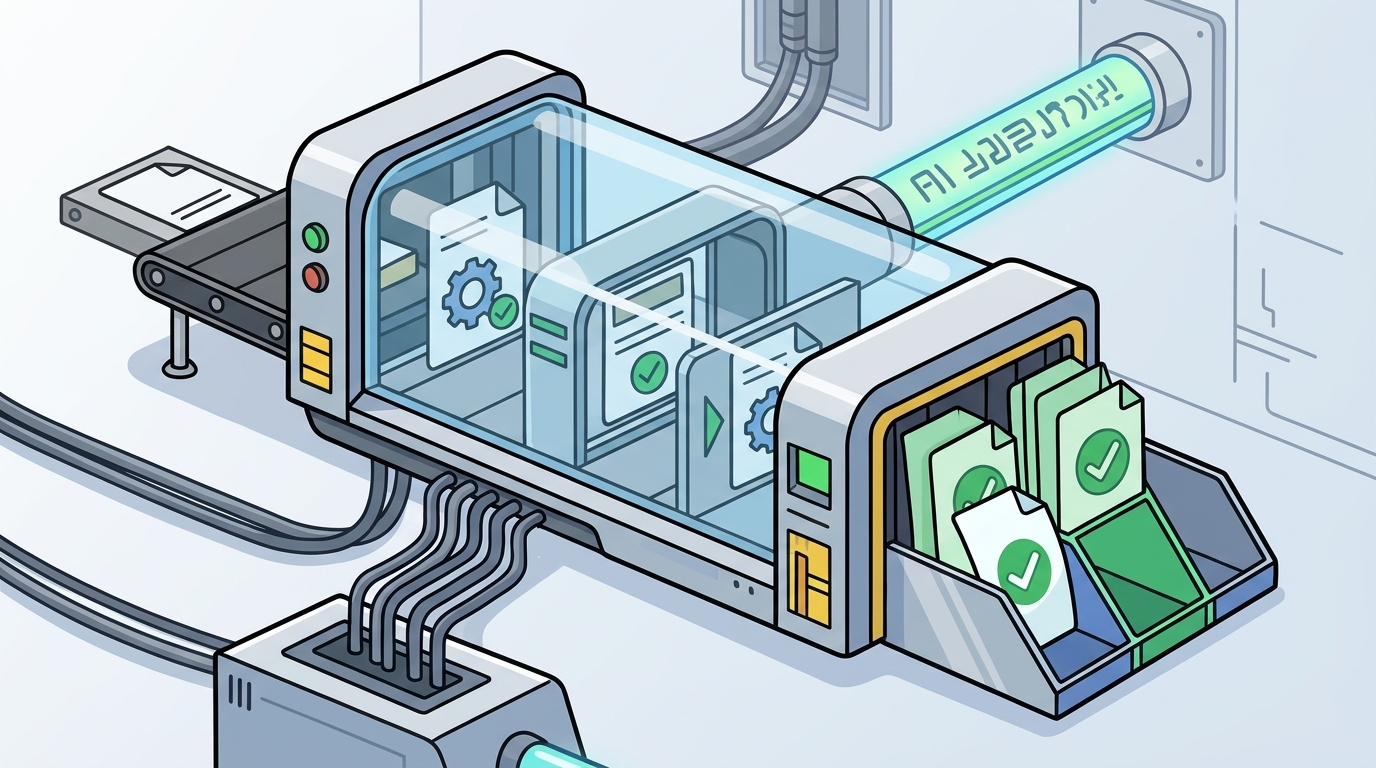
Automated verification is the process of running a suite of tests to ensure that software behaves as expected before deployment. In traditional development, this requires writing unit tests and integration tests, a time-consuming task for non-developers. AI builders like I Team App Builder include a verification phase in their build pipeline. The system runs static analysis and runtime checks to identify potential errors or logical inconsistencies.
This does not replace professional security audits or compliance reviews, but it provides a baseline level of quality assurance. You can review the generated code and test results to ensure they meet your specific business requirements. The versioned project structure allows you to roll back to previous states if a new update introduces issues. This safety net is essential for maintaining trust in your approval workflows.
Implementing Your First Approval System
To start, you need to map out your current manual process. Identify the trigger, the approvers, and the final action. For example, a leave request might be triggered by an employee, approved by a manager, and recorded in the HR system. Write this down in plain English. Then, input this brief into the AI builder. The platform will generate a plan, build the application, and verify the runtime behavior.
Once the initial build is complete, you can refine the logic. If you find that the approval time is too long, you can add a rule for auto-approval after 48 hours. The AI will update the code and re-verify the application. This iterative process allows you to build a sophisticated system without ever touching a code editor. The result is a functional, serverless application that handles your approvals efficiently.
Key Takeaways
- AI app builders translate plain-English descriptions into functional approval workflows, eliminating the need for manual coding.
- Serverless architecture abstracts infrastructure management, allowing you to deploy applications without managing servers or security patches.
- Role-based access control can be defined in natural language, ensuring that permissions are applied correctly across the application.
- Automated verification provides a baseline of quality assurance by running static and runtime checks on the generated code.
- Iterative refinement allows you to adjust business logic and re-verify the application, ensuring it meets evolving business needs.
- Keeping provider credentials server-side enhances security by preventing sensitive keys from being exposed to the client side.
Frequently Asked Questions
Do I need to know how to code to use an AI app builder?
No, you do not need to know how to code. AI app builders are designed to accept plain-English descriptions of your desired application. The platform handles the code generation, infrastructure setup, and testing automatically.
How does the platform handle server management?
Can I define complex approval rules in plain English?
Yes, you can define complex rules by describing the conditions and outcomes in natural language. The AI engine interprets these descriptions and generates the corresponding logic and data structures.
Is the generated code secure?
The platform includes automated verification and keeps provider credentials server-side to enhance security. However, you should independently review the software before using it for high-risk or regulated use cases.
Can I modify the application after it is built?
Yes, you can modify the application by updating your brief or adding new rules. The AI will regenerate the code and re-verify the application, allowing for iterative development.
Does this replace professional developers?
No, this does not replace professional developers for complex, enterprise-grade systems. It is designed for founders and small teams who want to build functional applications without managing the engineering stack.
Conclusion
Setting up approval workflows without code or servers is now accessible to non-technical users through AI-assisted platforms. By leveraging plain-English descriptions and serverless architecture, you can build and deploy robust systems that handle your business logic efficiently. I Team App Builder provides the tools to plan, build, and verify these applications, allowing you to focus on your core business operations. To begin your first project, visit I Team App Builder and describe your workflow in plain English.